
Spelling Rule Exceptions: Meet the Rule Breakers
Just when you think you’ve mastered a spelling rule, along comes a word that breaks it. These exceptions aren’t mistakes — they’re part of the language’s quirky charm. In this post, we’ll look at three common rule-breakers and how to teach them without frustration.
🚫 “i before e” — Except After C?
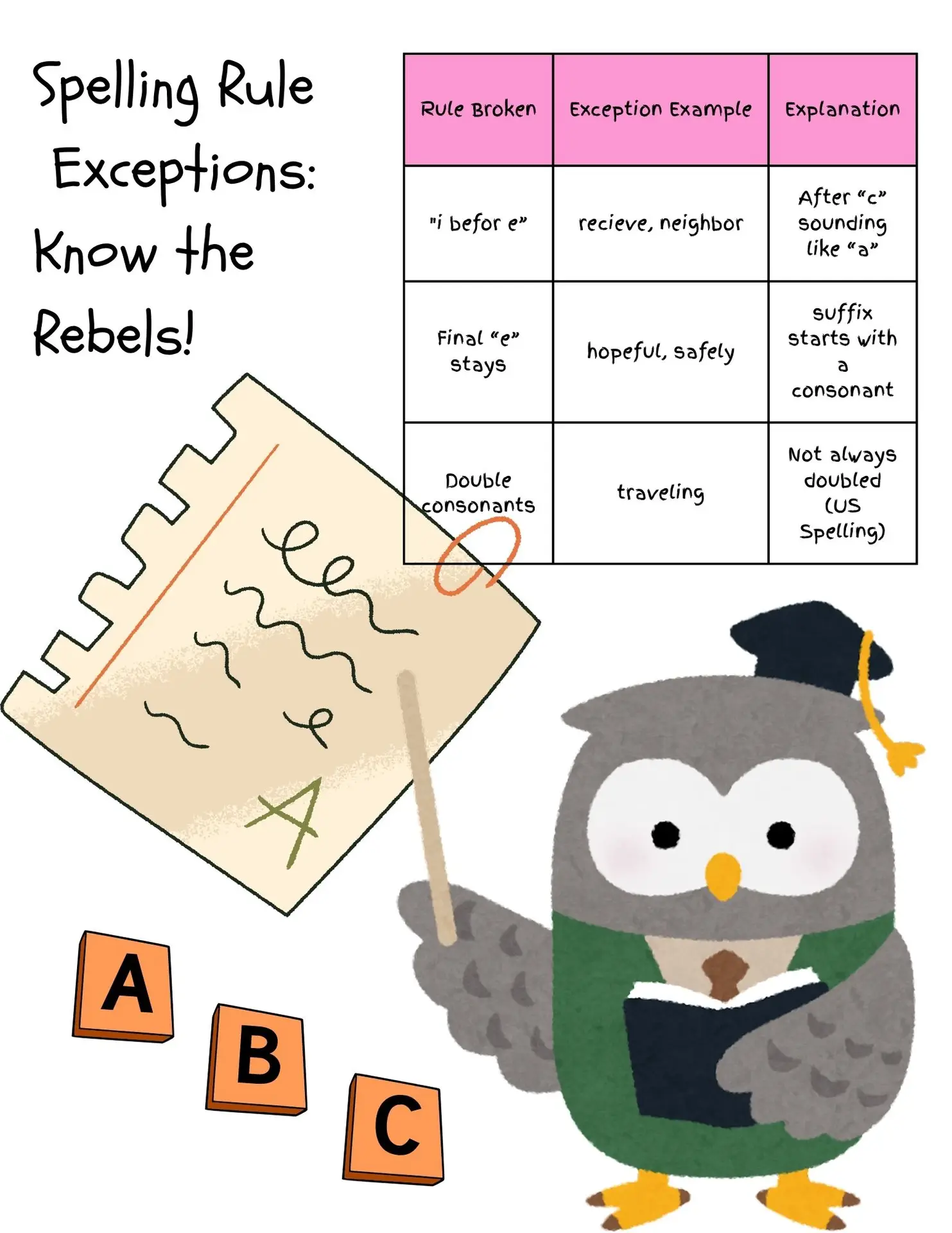
This rule works most of the time, but not always. Words like receive and neighbor break it because they follow “c” or sound like “a.”
🧩 Final “e” That Stays
Normally, we drop the silent “e” before adding a vowel suffix. But if the suffix starts with a consonant — like -ful or -ly — the “e” stays: hopeful, safely.
✂️ Double Consonants That Don’t Double
In American English, some words like traveling don’t double the final consonant, while British English might: travelling. It depends on the region and the stress pattern.
📄 Free Poster: Know the Rebels
Download this visual guide to common spelling rule exceptions. It’s designed to help learners spot patterns and feel more confident when rules bend.
💬 Got a Favorite Exception?
Some rule-breakers are just too fun to forget. Share your favorites in the comments or Ask Meagen if you’d like a printable for a specific exception.
Leave a Reply